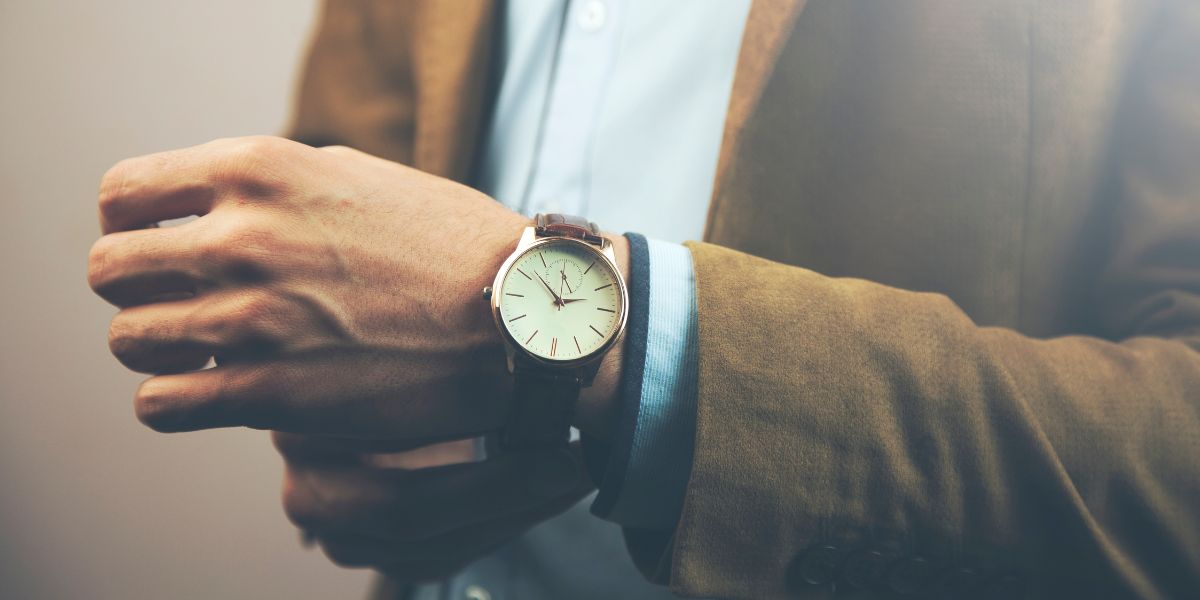
Who invented the wristwatch is a hotly debated subject among horologists. In the world of watches, there are many firsts. The first pocket watch, the first privately owned watch to make it to the moon and back, and the first water-resistant watch. The list goes on and on, and every reputable watchmaker in the world wants to be on the list somewhere.
But what about the wristwatch? Who can rightfully claim that they first designed watches as we know them today? Before the invention of the wristwatch, we had pendants or pocket watches designed to hang from a chain. These were first created and popularised during the 16th century. However, the idea of strapping a watch to your wrist didn’t come about until later.
Patek Philippe
According to the Guinness World Records, the first wristwatch was made in 1868 for Countess Koscowicz of Hungary, by Swiss watchmaker Patek Philippe. Initially intended as a piece of jewellery, the creation of wristwatch became a sought-after accessory for both ornamental and functional purposes. Being an official world record holder, it appears that Patek Philippe invented the wristwatch first.
However, the record for the invention of the first wristwatch may in fact belong to another watchmaker.
Breguet
It was in 1775 that Abraham-Louis Breguet set up his watchmaking workshop in Paris. According to Breguet, the very first wristwatch was made in 1810 for the Queen of Naples one of Breguet’s most esteemed clients.
There is documented evidence of a commission made on 8th June 1810, where Breguet was tasked to design a 'repeater watch for bracelet’. The wristlet was reportedly crafted from hair and gold thread. Unfortunately, the current whereabouts of this magnificent watch are not known. The last known record of the watch was for repair in 1855.
If we go back further, there is some historical evidence of watches worn on the wrist even before the time of Breguet:
- 1790 - an accounts book mentions a watch attached to a strap manufactured by Jacquet-Droz and Leschot.
- 1650 - a philosopher and mathematician by the name of Blaise Pascal were rumoured to wear his watch on his wrist.
- The late 1500s - Queen Elizabeth I reportedly received a bracelet watch as a gift from Robert Dudley, however, the maker of the watch is unknown.


The Evolution of The WristWatch
There has been a gradual evolution towards the wristwatch over the centuries. The first wristwatches designed for aristocratic women were considered more like jewellery, worn for ornamental purposes. It was also a symbol of status, with wristwatches only created and sold on commission to the wealthy.
It wasn't until 1888 that the watch manufacturer La Champagne unveiled an entire collection of wristwatches. And just a year later a patent was filed for the concept of the wristwatch in Bern.
The early 1900s saw a shift in the watchmaking industry with the wristwatch finally established as a worthy time-telling accessory. Between the ring, pendant, and bracelet, the latter had won people over as a fashionable and functional means to tell the time.
Men may have created the first wristwatches, but it wasn't until the First World War that men began to fully appreciate wearing a watch on their wrist. The wristwatch proved a useful tool for telling the time at a glance and coordinating and enacting military strategies with precision.
Wrist Watches of Today
Today’s wrist watches are evolving for a more connected and technology-driven world, as seen with the rise of the smartwatch. However, the pendant or pocket watch is still popular among vintage watch collectors. At T. H. Baker we have a stunning collection of wristwatches and old-style pocket watches - browse our watch collections today.
Have you heard about any wristwatches dating back earlier than Breguet in 1810? Join in the fascinating conversation on who invented the wristwatch on Facebook.