The store will not work correctly when cookies are disabled.
We use cookies to make your experience better.
We use cookies to enhance your browsing experience, serve personalized ads or content, and analyze our traffic. By clicking "Accept All", you consent to our use of cookies. Cookie Policy.
Manage your cookies preferences.
Please select and accept your cookie preferences:
Marketing & Functional
T.H.Baker and our advertising partners (including social media platforms like Google, Facebook, and Instagram) use cookies to provide personalised offers. If you don’t accept this tracking, you will still see T.H.Baker advertisements on other platforms at random.
We use functional cookies to analyse how our website is being used. This data helps us to discover errors, provide insights for advertising analysis and affiliate marketing.
Required
We use cookies to enable essential website operations and to ensure certain features work properly, like the option to log in or add a product to your shopping cart. These cookies are always enabled, otherwise, you can't view the website or shop online.
When referring to the shape of a diamond we use the term cut, for example ‘princess cut’ or ‘emerald cut’, however this is not to be confused with the cut of a diamond. Whilst not part of the Four Cs, the shape of the diamond will have a significant impact on how the diamond looks and feels with each shape possessing its own unique characteristics. Here we aim to give you all of the necessary facts regarding our most popular shapes in order to help you make the right decision.
If you already have a shape in mind, you can shop each collection by clicking their relevant diamond shape below.
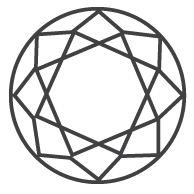
Often viewed as the most popular shape, round brilliant diamonds tend to offer more flexibility when it comes to the cut, colour and clarity, allowing you to balance all of these factors whilst maximising the amount of brilliance and fire.
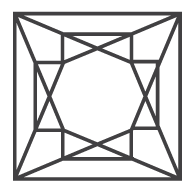
Traditionally square in shape with pointed corners, a princess cut diamond will often showcase an impeccable level of brilliance (brightness) making it a highly desirable shape.
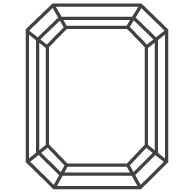
Emerald cut diamonds are generally rectangular in shape with step-cut facets within the diamond’s pavilion. Whilst the unique shape of an emerald cut diamond is undeniably beautiful, it can on occasion make inclusions and colour more apparent if you’ve opted for a lower quality diamond.
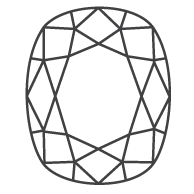
Its smooth rounded corners enhancing the brilliance of the diamond are making the cushion shape more and more popular. If you opt for a cushion cut, try to find a diamond with few inclusions as these imperfections are naturally highlighted due to the large facets.
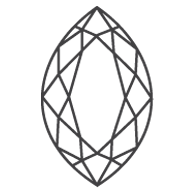
The unique shape of the marquise cut diamond makes it perfect for elongating the fingers and emphasising the diamond’s carat weight, often giving the illusion of a much larger diamond. It is important to note however, that due to the narrow shape of the marquise cut diamond; occasionally they can produce an area of reduced colour quality at the centre of the diamond so make sure to look out for this when making your purchase.
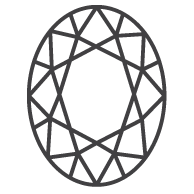
As with the marquise cut, oval cut diamonds are narrower than the typical round brilliant thus making them perfect for making the finger appear more slender and elongated. As with the round brilliant, oval cut diamonds showcase a breathtaking amount of brilliance making for a beautifully sparkling diamond.
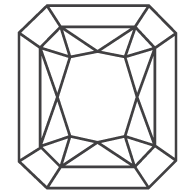
A combination of emerald cut and round brilliant, the radiant cut diamond features trimmed corners and can vary from rectangular to square. As with any shape, the more narrow (and therefore more rectangular) the diamond is, the more likely there is to be an area of reduced colour quality at the centre of the stone.
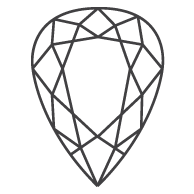
A pear cut diamond features a beautiful tear drop shape resembling a cross between round brilliant and marquise cut. Perfect for enhancing a diamond’s brilliance as well as elongating the fingers, it is essential for the pear cut diamond to have perfect symmetry in order to maximise the characteristics of the diamond.